Surgery guide · Nose
Revision Rhinoplasty in Korea — Cost, Methods, Benefits & Risks (2026)
Revision Rhinoplasty in Korea costs US$5,000–9,000 all-in in 2026 with MISOODA — the same price Korean locals pay, with a free interpreter and concierge included.
Revision Rhinoplasty in Korea is performed at internationally recognised Gangnam clinics, typically costing USD $5,000–$9,000 in 2026. As a Korean government-registered facilitator for international patients (Reg. A-2014-01-01-1414) with 12+ years, MISOODA connects you with 150+ verified clinics at the same price as locals — no hidden fees, no ghost doctors.
✓ 12+ years✓ Same price as locals✓ No ghost doctors
2026 quick answer
Revision Rhinoplasty in Korea — cost & key facts (2026)
Revision Rhinoplasty in Korea costs about USD $5,000–$9,000 in 2026, often 30–50% less than the US or back home. The final price varies by case and clinic — get a free quote.
- Foreigner markup
- None — same price as locals
- Free quote
- Within 24h (USD)
- Clinics
- 150+ verified Gangnam
Price comparison
Revision Rhinoplasty cost: Korea vs Singapore (2026)
Approximate 2026 all-in ranges. With MISOODA you pay the same price as Korean locals — no foreigner markup.
| Option | Korea (MISOODA) | Singapore | You save |
|---|---|---|---|
| Revision (revision rhinoplasty) | US$6,000–12,000 | US$14,000–20,000 | ~50% |
| Premium (rib-cartilage revision) | US$8,000–15,000 | US$16,000–25,000 | ~45% |
2026 guideline ranges; exact price varies by clinic and case — get a free itemised quote in 24h.
Total cost
Beyond surgery: what else to budget in Korea
The surgery fee is the main cost. For a realistic total, plan for a short recovery stay — most patients stay about 1–2 weeks.
| Item | Approximate 2026 |
|---|---|
| Consultation + interpreter & concierge | Free with MISOODA (others often US$50–200) |
| Accommodation near Gangnam | US$50–120 / night |
| Meals & local transport | US$30–60 / day |
| Airport transfer | US$30–80 (subway from ~US$10) |
| Optional post-op care (de-swelling / LED) | from ~US$30 / session |
Approximate market ranges for a ~2-week stay; your MISOODA case manager gives a personalised, itemised estimate — free quote in 24h.
Real quotes
What Korean clinics actually quoted for rhinoplasty (2024–2026)
13 written quotes from 5 Gangnam clinics issued to MISOODA patients between November 2024 and March 2026 (BRAUN, Dream, Wonderful, Returning, 345). Non-surgical items (fat grafting, skin devices, Botox) are excluded.
| Procedure | Line items | Quoted range (KRW) | ≈ USD |
|---|---|---|---|
| Alar (nostril) reduction, alone | 2 | ₩0.7M–₩1.5M | US$520–US$1,110 |
| Hump removal, alone | 1 | ₩1.2M | US$890 |
| Tip plasty without implant | 1 | ₩2.75M | US$2,040 |
| Primary rhinoplasty (bridge + tip) | 4 | ₩5.8M–₩8.6M | US$4,310–US$6,390 |
| Complex / open rhinoplasty (osteotomy, septal or rib cartilage, alar work) | 4 | ₩10.89M–₩16.84M | US$8,090–US$12,510 |
| Revision rhinoplasty with alar rim graft | 1 | ₩20.64M | US$15,340 |
Quotes are per case and per clinic — anaesthesia, hospital stay and post-op care may be itemised separately. Not a guarantee of price or result. FX: 1 KRW = 0.000743 USD (11 Sep 2026). Cartilage source (septal, ear, donor rib), implant material and revision status drive most of the spread.
Plastic surgeons at the clinics that issued these quotes
The quotes do not name the operating surgeon; these are the board-certified plastic surgeons currently listed for those clinics on MISOODA.
- Dr. Tae-Gyu Kim — plastic surgeon, BRAUN Plastic Surgery (20 years)
- Dr. Ji-won Lee — plastic surgeon, BRAUN Plastic Surgery (12 years)
- Dr. Dong-wan Ryu — plastic surgeon, BRAUN Plastic Surgery (12 years)
- Dr. Yang Soo Park — plastic surgeon, Dream Plastic Surgery (33 years)
- Wonderful Plastic Surgery — surgeon profiles on the clinic page
On this page
- ›Quick facts
- ›Real quotes
- ›What is Nose Revision/ Revision Rhinoplasty?
- ›Revision Rhinoplasty: Unsatisfactory nose
- ›Revision Rhinoplasty: Exaggerated nose
- ›Revision Rhinoplasty: Implants Side effect 1
- ›Revision Rhinoplasty: Implants Side Effects 2
- ›Revision Rhinoplasty: Side effects of implants 3
- ›Revision Rhinoplasty: Nasal congestion
- ›Revision Rhinoplasty: Inflamed nose
- ›Revision Rhinoplasty: Capsular contracture
- ›Revision Rhinoplasty: Nose Bridge/ Nostril
- ›Korean Nose Surgery/ Rhinoplasty Cost
- ›FAQ
At a glance
Quick facts
- Duration
- 2 hours
- Anesthesia
- Local (Deep Sleep) Anesthesia
- Hospitalization
- N/A
- Stitch Removal
- 5-7 days after
- Clinic Visit
- 2-3 times
- Recovery Period
- Return to everyday activity 1 week after
- Foreigner markup
- None — local price
- Free quote
- Within 24h (USD)
Guide
What is Nose Revision/ Revision Rhinoplasty?
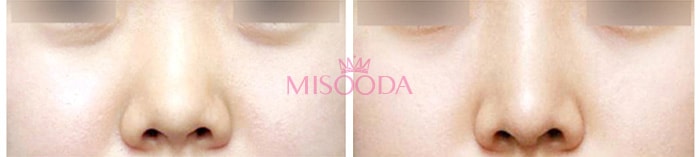
Revision rhinoplasty is a follow-up surgery after primary surgery. Usually, functional issues, aesthetic concerns, or both, drive the need for revision surgery. Revision rhinoplasty can help improve the contour, shape, or function of the nose
Here are the cases of revision rhinoplasty:
- 1) Unsatisfactory nose: If there is no effect after nose surgery
- 2) Exaggerated nose: If the nose bridge & tip is too high
- 3) Implants Side effect 1: Nose tip is lowered or reddened
- 4) Implants Side Effects 2: Silicone showing
- 5) Side effects of implants 3: When the implants move
- 6) Nasal congestion: clogged nose after nose surgery
- 7) Inflamed nose: inflammation after surgery
- 8) Capsular contracture: those whose nose is transformed due to Capsular contracture
- 9) Nose / Nostril: those whose nose or nostril look distorted or asymmetrical
Guide
Revision Rhinoplasty: Unsatisfactory nose
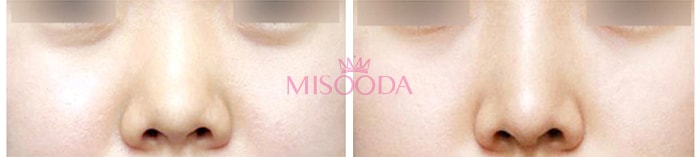
- ▶ If there is no effect after nose surgery Nose bridge: The current patient's nose shape and thickness of the nose are checked and the appropriate implant is reinserted. Remove all implants and cartilage that were used previously.
- Nose tip: Removal of all implants or cartilage used in the nose at the previous surgery. Reshape the nasal tip using autologous cartilage and harmonizing the ratio of the nose bridge
Guide
Revision Rhinoplasty: Exaggerated nose
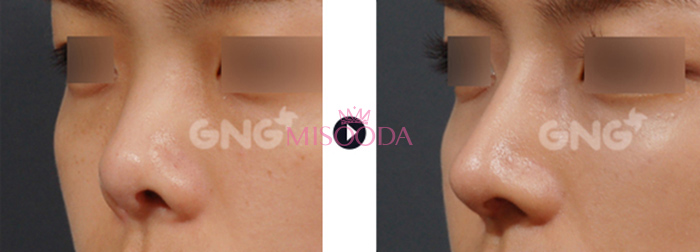
- ▶ If the nose bridge & tip is too high Nose bridge: Depending on the nose condition of the patient, nasal osteotomy may be performed. Reinforcement of the implant that is appropriate for the patient after hump removal.
- Nose tip: It is the most frequent side effect when using L-shaped silicon. Use autologous cartilage instead of L-shaped silicon for natural nose shape.
Guide
Revision Rhinoplasty: Implants Side effect 1
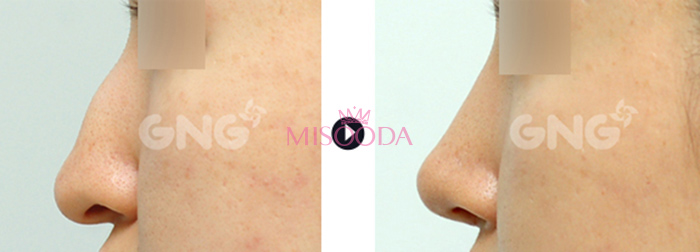
- ▶ Nose tip is lowered or reddened When the tip of the nose is lowered: Correct with the cartilage used for the first operation (or removal if necessary) and additional cartilage
- When the tip of the nose is red: If the skin is thin or sensitive, correct by covering silicon with the dermis when doing revision tiplasty
Guide
Revision Rhinoplasty: Implants Side Effects 2
- ▶ Silicone see-through
- It is a side effect that is most common in patients with thin or sensitive skin
- Nose bridge: Re-insert a lower silicon → Correct with the dermis or fascia putting over the silicone to prevent it from seeing through
- Nose Tip: Correct via autologous cartilage instead of non-silicone (use additional autologous dermis and fascia if necessary)
- *Do not use silicone if you are concerned about inflammation. Correct through autologous cartilage or dermis
Guide
Revision Rhinoplasty: Side effects of implants 3
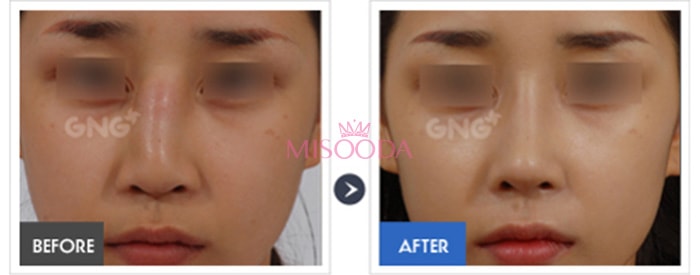
If the operation is performed with neglect of the asymmetry of the patient or the imbalance of the soft tissue force, the movement of the implant causes the nose to appear distorted.
In this case, revision nose surgery has to be done after re-measurement of silicone shape and height appropriate for the patient. In the event of an inflammation of the surgical site, treatment of inflammation or minimization of soft tissue damage is needed.
Guide
Revision Rhinoplasty: Nasal congestion
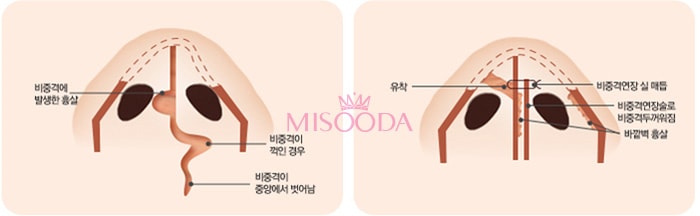
- Nose is blocked as side effects after nose surgery
- If the mucous membrane inside the nose is swollen or hematoma has occurred
- When skin bumpiness occurs
- When the outer alar cartilage narrows inward
- When nasal septum becomes thicker or bent
- When the nasal septum is attached to the outer cortical wall
Guide
Revision Rhinoplasty: Inflamed nose
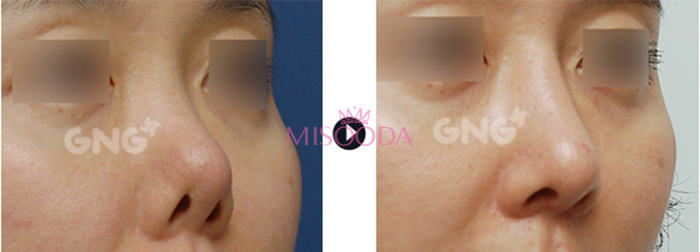
- Inflammation after surgery
- There is a high risk of infection when there is a lot of sebum & acne on the skin. When the implant is used up to the nose tip, it stimulates the skin and induces inflammation
Insert new implant after removing existing implant → Continuous antibiotic treatment to prevent secondary inflammation → If implants are not suitable, reconstructive surgery is performed using autologous tissueb
Guide
Revision Rhinoplasty: Capsular contracture
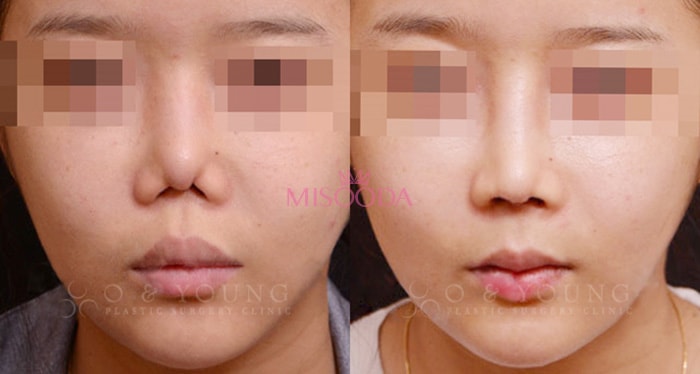
▶ Nose deformation by capsular contracture If the inflammatory treatment is not initiated early, scarring occurs on the surgical area, then the skin tissue surrounding the silicone is contracted and the nose is lifted. The scar tissues attached should be released and the tip of the nose corrected by using the nasal septum of the nose tip. If the nose reconstruction is severe, additional cartilage may be used (rib cartilage).
Guide
Revision Rhinoplasty: Nose Bridge/ Nostril

▶ In case the nose bridge or nostril is distorted or asymmetrical If the patient is operated ignoring the asymmetry of the nose, the asymmetry may get worse after the surgery. After removing the inserted silicone from the previous surgery, the curved nasal septum and tip are also corrected. If additional correction is needed, osteotomy & implant insertion can be done together.
Guide
Korean Nose Surgery/ Rhinoplasty Cost
General price guide line for Korean Nose Surgery/ Rhinoplasty is USD$900 to USD$7,500 according to Korea Health Industry Development Institute. The price is decided depending on the method and difficulty of patients’ case. The procedures below can be added on the top of general nose augmentation and the price will be in variable range.
Reference
Revision Rhinoplasty — at a glance
| Part |
From (USD) |
To (USD) |
|
Rhinoplasty (Silicone + cartilage) |
3,200 | 3,800 |
| Nostril Reduction | 900 | 1,800 |
| Aquiline Nose Rhinoplasty | 3,600 | 5,500 |
| Crooked Nose Correction | 5,500 | 7,300 |
|
Nasal Bone Reduction (Osteotomy) |
4,500 | 7,500 |
2026 guideline figures; vary by clinic and case.
Why MISOODA
Same price, more protection, even more perks
What's included
You pay the same price as Korean locals — no foreigner markup. As a Korean government-registered facilitator for international patients since 2014 (Reg. A-2014-01-01-1414) we compare 150+ verified Gangnam clinics, arrange English coordination, and support your revision rhinoplasty journey from quote to aftercare.
✓ Same price as locals✓ No hidden fees✓ Board-certified surgeons✓ No ghost doctors
Good to know
Frequently asked questions
How much does Revision Rhinoplasty cost in Korea?+
How many days do I need in Korea for Revision Rhinoplasty?+
Is Revision Rhinoplasty in Korea safe for foreigners?+
Do I pay the same price as Korean locals?+
How safe is revision rhinoplasty in Korea?+
What is recovery like after revision rhinoplasty?+
Why do people choose Korea for revision rhinoplasty?+
Who is a good candidate for revision rhinoplasty?+
How long do I need to stay in Korea for revision rhinoplasty?+
What's included in the price for revision rhinoplasty?+
Can revision rhinoplasty be combined with other procedures?+
Is there a tax refund for plastic surgery in Korea in 2026?+
Do I still pay VAT on cosmetic surgery in Korea?+
How can I save on plastic surgery in Korea now that the tax refund ended?+
Keep exploring